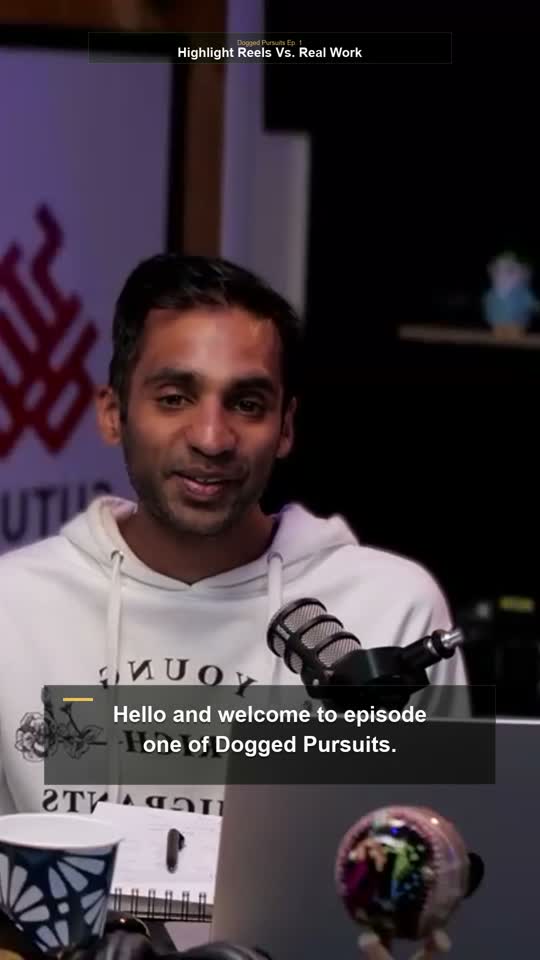
Watch 0:05
The short version of the promise
A quick intro for people deciding whether Chai With Jai is practical enough for the work they actually do.
You've watched the tutorials. You've tried the tools. You're putting in extra hours to keep up — and you still don't have one thing that actually saves you time. That's what I fix.
Trusted by


Imagine…
Hi, I'm Jai
I spent the last ten years in New York City as a software engineer and teacher — shipping production software at HashiCorp, building curriculum from scratch, and consistently earning a 4.9 instructor rating across every class I've ever taught.
But the reason I started Chai With Jai isn't on my résumé.
I watched smart, capable people — friends, colleagues, clients — get left behind by AI. Not because they weren't sharp enough. Because nobody gave them a practical first step. Everyone was selling the category. Nobody was helping with the work.
Now I do one thing: I help non-coders get their first real AI win.
Watch 0:05
A quick intro for people deciding whether Chai With Jai is practical enough for the work they actually do.
Watch clip
A first look at the media side of the work: honest conversations about ambition, execution, and what happens behind the highlight reel.
Why this works
They need a translation layer: what to build first, how to judge whether it works, and how to keep using it after the workshop energy wears off.
I bring production engineering, teaching, and instructional design into one coaching loop.
What I Keep Hearing
The problem isn't intelligence. It's support.
Most AI education starts in the wrong place — models, frameworks, prompt patterns, browser extensions. None of it answers the question a working person actually needs answered:
What should I build first that will make next week easier?
The Shift
AI education for working people can't start with the tools. It has to start with one real work problem.
Not the impressive one. The useful one.
The one that already costs you time every week — messy meeting follow-ups, content trapped in a long draft, proposals rebuilt from scratch, customer research that never turns into usable insight.
Start there, and AI stops feeling abstract. It starts feeling like something you can actually use.
One recurring problem. One practical build. One real win you can point to.
My Approach
I don't teach 19 prompt patterns. I don't sell AI at an altitude that makes normal people feel behind.
The goal isn't to leave impressed by AI. It's to leave with something you can actually use on Monday morning.
You learn how to separate hype from useful implementation choices.
You build repeatable workflows you can run weekly, not random experiments.
You move from "I should learn this someday" to using AI in active projects.
What Students Say
"Your class took away my fears and doubts that AI was unattainable. This class really changed my mindset. I feel empowered."
"You don't know what you don't know until someone comes along and teaches you what the possibilities are. I can't thank Jai enough for opening my eyes to what's possible with AI."
Students don't just leave feeling better. They leave clearer on what AI can do for their work — and with something concrete to show for it.
"Three months later, I threw my first successful event. The focus did not just help me find my One Thing - it helped me understand why I kept losing momentum."
"I used to spend 4 hours every night planning my day and catching up on tasks, only to watch it all fall apart by lunchtime the next day."
"The day Jai showed me how to think with AI instead of just using AI tools, everything clicked."
What to expect
The experience is designed around one useful build, then the operating rhythm that helps it survive after the session ends.
We narrow the problem, define the first useful workflow, and set expectations before build time starts.
You make something concrete with support, templates, prompts, and judgment calls explained in plain language.
You leave with next steps, reusable artifacts, and a clearer way to evaluate future AI work.
You don't need to code. You don't need the perfect idea. You just need one real problem and a willingness to try.